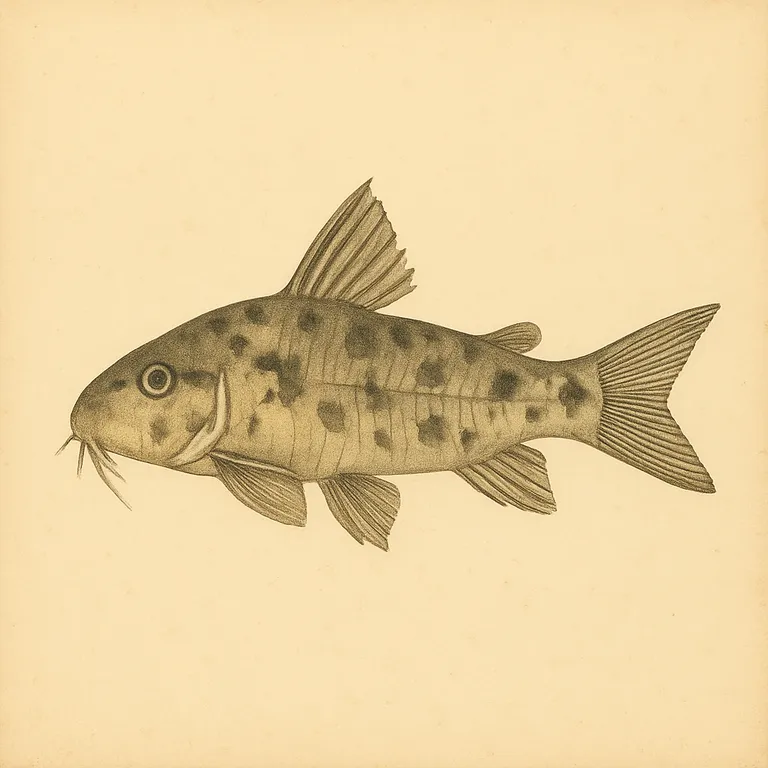
Corydoras
Corydoras spp.
FishFreshwater
- Care level
- Easy
- Temperament
- Peaceful
- Recommended tank
- 60 L
- Maximum size
- 6 cm
- Temperature
- 22–26 °C
- pH
- 6–7.8
- Group size
- ≥ 6
- Diet
- Omnivore
Care at a glance
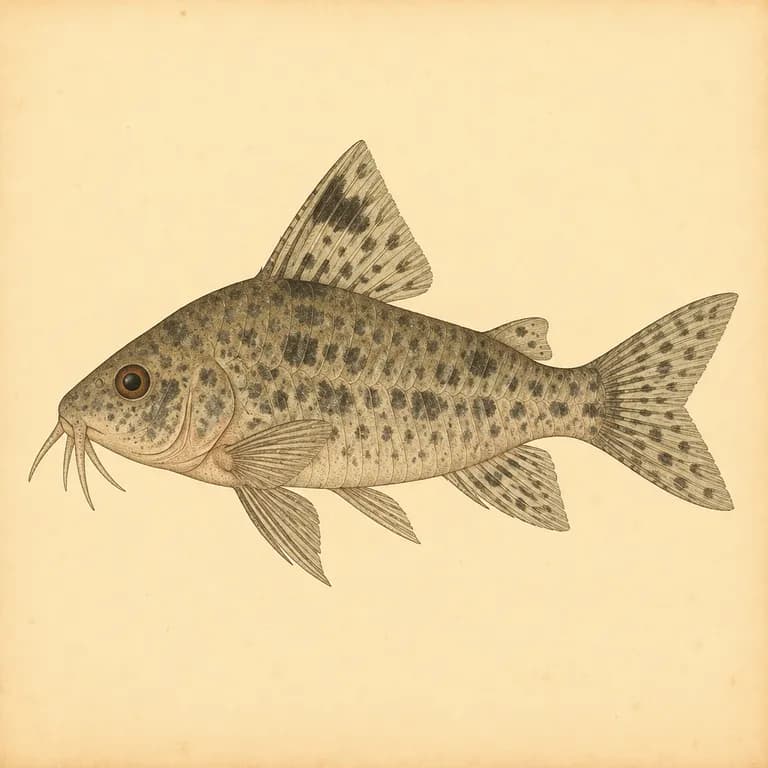
Corydoras are the friendly clean-up crew of the freshwater aquarium: small armoured catfish that spend all day rummaging through the substrate with their barbels, hunting for scraps. They are pronounced group animals that visibly perk up in the company of their own kind.
That digging habit imposes one hard requirement: a soft bottom of fine sand or rounded grains, or the sensitive barbels get damaged. Do not count leftovers as a full menu; feed sinking tablets or granules directly. Treated this way it is a sturdy, cheerful species that lives for many years.
Origin and habitat
Corydoras come from South America, where they move in groups through shallow streams and flooded banks. This page covers the common species with similar care needs, grouped together as Corydoras spp. After a recent reclassification, many familiar species are now listed scientifically under other genus names, such as Hoplisoma, though shops still simply call them corydoras.
Setting up the aquarium
Give them an open patch of sand at the front, with plants and wood at the back for shade and cover. They spend all day with their belly and barbels on the bottom, so siphon the sand as well at every water change.
Corydoras gulp air at the surface now and then and absorb it through their gut. A quick dash to the top is therefore normal. If they dart up often and in a hurry, check the oxygen level and water quality.
Behaviour and tankmates
They go well with small, calm fish that swim higher up in the water. Buy a group of one species rather than a mix of single fish, because they prefer to join their own kind. Take care when catching them: the hard spines in their pectoral and dorsal fins easily get tangled in a net, so use a small container instead.
Feeding
Besides tablets and granules they like frozen food such as bloodworms, brine shrimp and daphnia. Faster fish often eat everything before it reaches the bottom, so feed now and then just before the lights go out. A healthy corydoras has a slightly rounded belly.
Male or female, and breeding
Seen from above, females are broader and rounder than the slimmer males. Spawning often follows a large water change with slightly cooler water. A male and a female then take up the well-known T-position, after which the female carries the eggs between her pelvic fins and sticks them to the glass or a leaf.
Because tankmates and the parents readily eat the eggs, you can gently slide the eggs off the glass and let them hatch in a separate container with tank water. The fry then get very fine food and newly hatched brine shrimp.
Good to know
Best not combined with
Related species

Keep Corydoras in the BlubHub app
Add this species to your inhabitants, with count and photos, and see the care info next to your own water values, target bands and reminders. Free, no account, everything on your own device.
Values are mainstream hobbyist guidance, not gospel. Always watch what your own animals need.