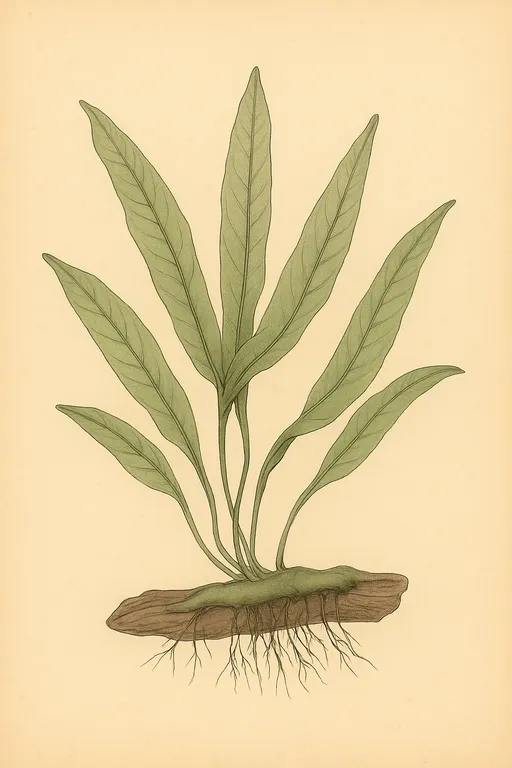
Java fern
Microsorum pteropus
PlantsFreshwater
- Care level
- Easy
- Maximum size
- 30 cm
- Temperature
- 20–28 °C
- pH
- 6–7.8
- Light
- Low
- Diet
- Photosynthetic
Care at a glance
The Java fern is, along with anubias, the classic indestructible aquarium plant: broad, ribbed leaves on a creeping rhizome that you attach to wood or stone rather than plant in the substrate. Low light, no CO2, and soft or hard water alike are no problem at all.
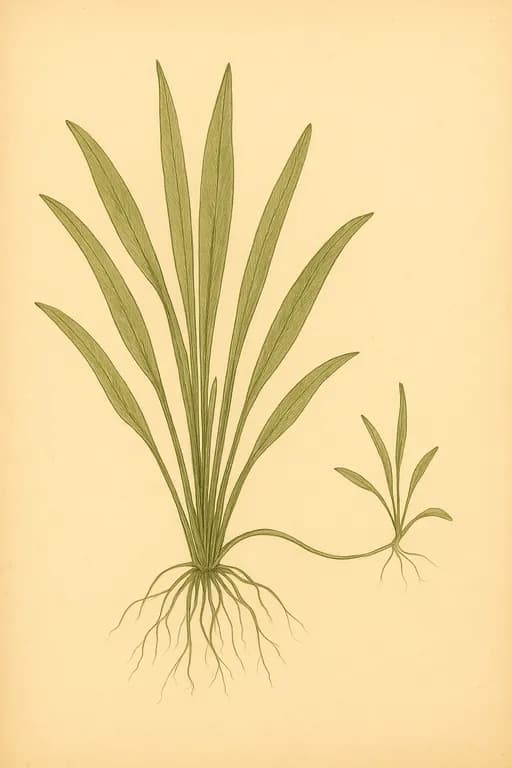
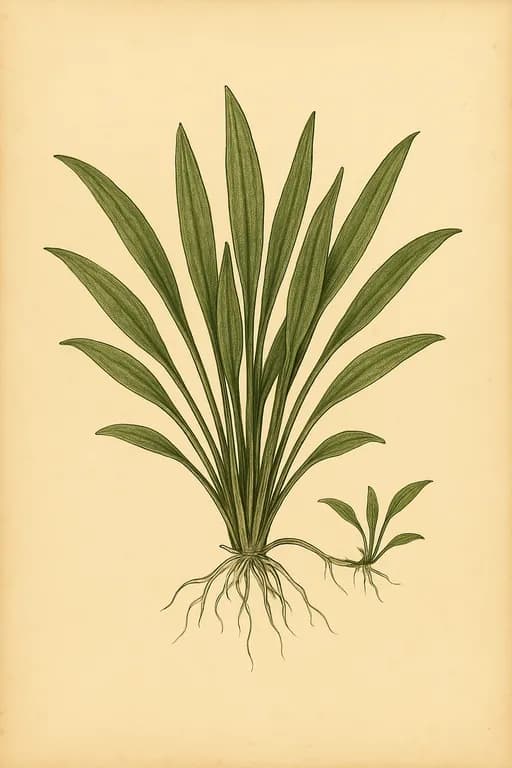
As with anubias: never bury it, or the rhizome rots. Dark dots on the underside of older leaves are usually spore clusters, not a disease. Young plantlets grow mainly on the tips and edges of old leaves; you can pick them off and attach them separately once they have their own roots. That way a single plant fills an entire back wall within a couple of years.
Origin and varieties
Microsorum pteropus comes from Southeast Asia, where it grows on rocks and tree roots along streams, often in shade and partly above the water.
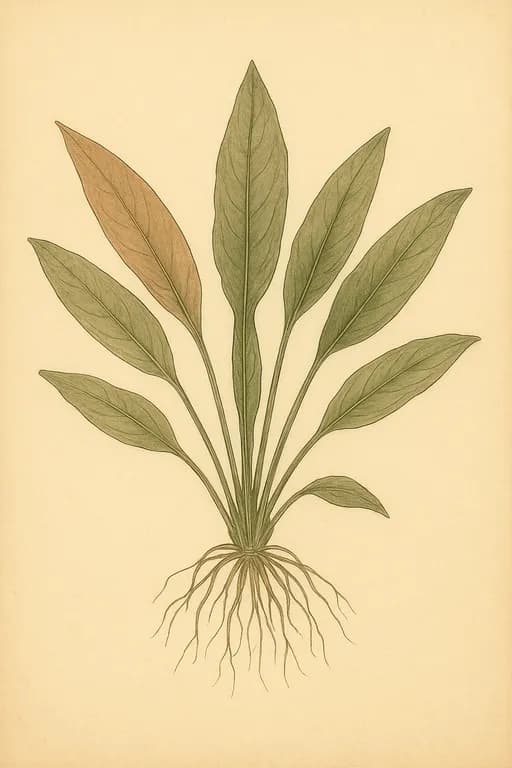
Besides the regular broad-leaved form there are several cultivated varieties. Windelov has leaf tips that branch into a kind of fringe, Narrow and Needle Leaf have slender leaves, and Trident has deeply cut leaves with several lobes.
Placement and tankmates
Java fern works well on driftwood and in crevices between stones where the rhizome can be wedged in. After a few weeks the roots take hold and the ties can come off.
The leaves are tough and most fish will not eat them. That is why Java fern also survives in a tank with larger cichlids or other fish that eat or dig up soft plants.
Light and nutrients
Java fern grows slowly and is content with low light. Bright light does not make it grow faster; the leaves tend to turn brown or glassy instead, and algae settle on them. Under a strong light, place it in the shade of wood or taller plants.
The plant takes its nutrients from the water through its leaves and rhizome, so root tabs in the substrate do nothing for it. In a tank with few fish, a little liquid fertiliser keeps the leaves dark green.
Propagation
Besides the young plantlets on the leaves, you can propagate Java fern by cutting through the rhizome, leaving a few leaves and some roots on each piece. An old leaf with plantlets can also be laid whole on wood or wedged between stones; the leaf slowly decays while the plantlets take hold.
Common problems
Brown, glassy patches that spread across the leaf until it turns soft and translucent are something different from the dark specks that healthy leaves often carry. This melting often follows a big change, such as a move to another tank, much brighter light or a long-term lack of nutrients.
Cut off the affected leaves. As long as the rhizome is firm, the plant will usually put out new leaves.
Related species

Keep Java fern in the BlubHub app
Add this species to your inhabitants, with count and photos, and see the care info next to your own water values, target bands and reminders. Free, no account, everything on your own device.
Values are mainstream hobbyist guidance, not gospel. Always watch what your own animals need.