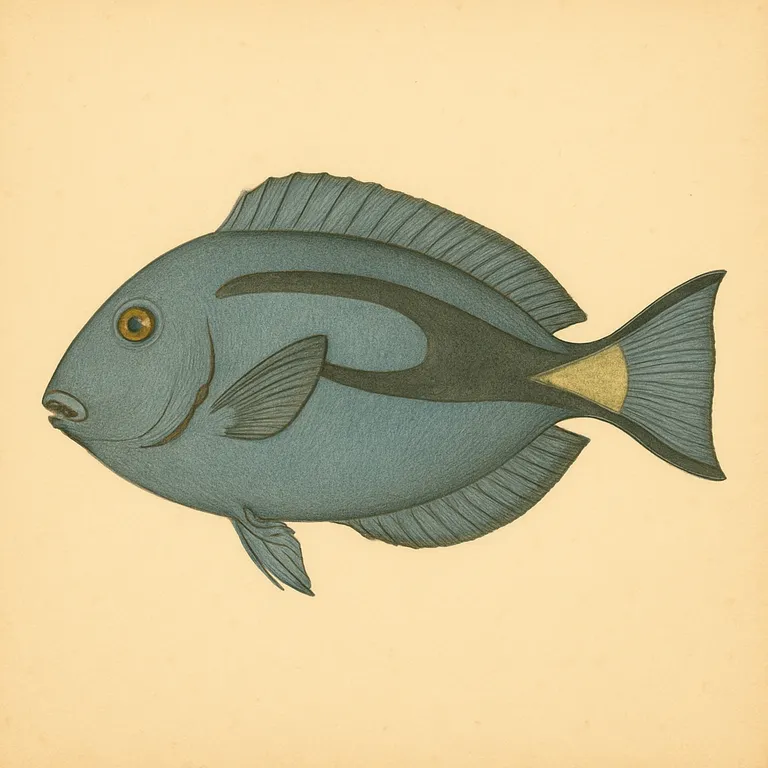
Blue tang
Paracanthurus hepatus
FishSaltwater
- Care level
- Moderate
- Temperament
- Semi-aggressive
- Reef safe
- Yes
- Recommended tank
- 500 L
- Maximum size
- 30 cm
- Temperature
- 24–27 °C
- pH
- 8–8.4
- Diet
- Omnivore
Care at a glance
The blue tang, known to the wider public as Dory, is one of the most beautiful marine fish there is, and also one of the most underestimated. Tiny juveniles grow into a thirty-centimetre fish that swims from side to side all day, which calls for a tank with genuine length rather than height.
It is notorious for its susceptibility to white spot; a quarantine period before the reef tank is not excessive caution with this species but standard practice. Beyond that it is reef-safe and peaceful towards other fish, though not towards other tangs. Feed algae daily, such as nori on a clip, as it wastes away on meaty food alone.
Origin and habitat
Paracanthurus hepatus is found in the Indian Ocean and the Pacific, on clear reefs with strong currents. Juveniles live in small groups around branching corals and dive in among the branches when danger threatens. It brings that behaviour into the aquarium: a blue tang lying flat on its side between the rocks has usually been startled or is still settling in, and is not necessarily ill.
Setting up the tank
Build the rockwork so that it has crevices and caves where the fish can wedge itself in to sleep or hide, and keep an open swimming lane in front of it. Provide strong flow as well. Plan the tank for the adult fish, and allow for the 500 litres from the table straight away, even for a juvenile only a few centimetres long.
Behaviour and tankmates
In a home aquarium it is usually kept as the only tang; a group needs a much larger system. Good tankmates are peaceful reef fish such as clownfish, chromis and gobies.
On either side of the tail base sits a sharp spine that it can flick out. Catch it with a container rather than a net, since the spine snags in the mesh, and mind your hands when working in the tank.
Feeding
Besides its daily algae, it readily eats frozen food such as mysis and brine shrimp, and dry food rich in seaweed or spirulina. Spread the food over several small portions a day. A sunken belly or a sharp ridge along the back points to underfeeding. Pale, pitted patches around the head and along the lateral line, known as HLLE, are often linked to an unvaried diet and mediocre water quality.
White spot and quarantine
White spot often starts with scratching against rocks and sand and with rapid breathing, before the familiar white dots appear like grains of salt on the body and fins. A fish can carry the parasite without looking ill. So keep a new blue tang separately for several weeks first. If it needs treatment, do it in that quarantine tank, because the usual remedies harm corals and invertebrates in a reef aquarium.
Good to know
Best not combined with
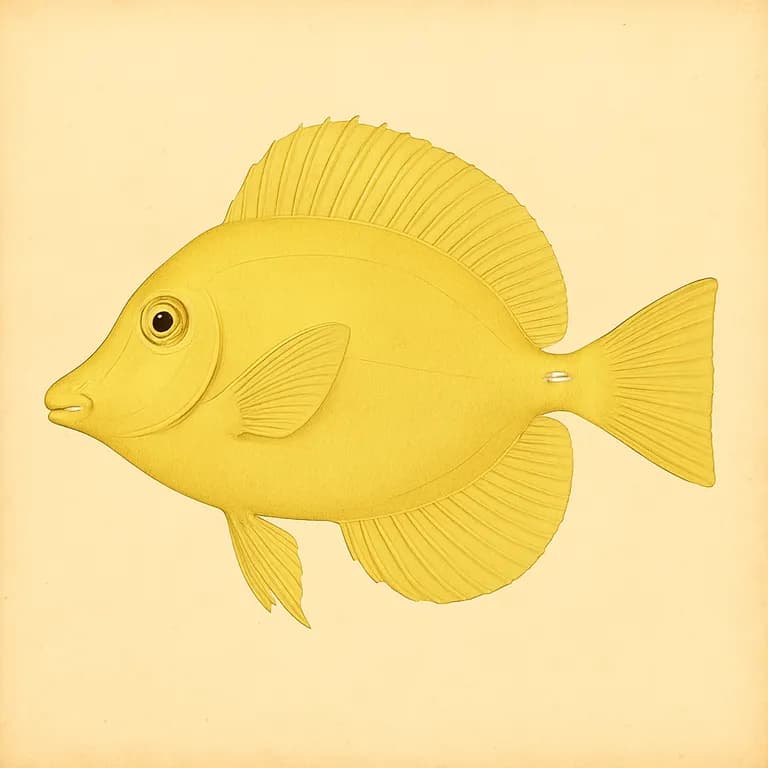
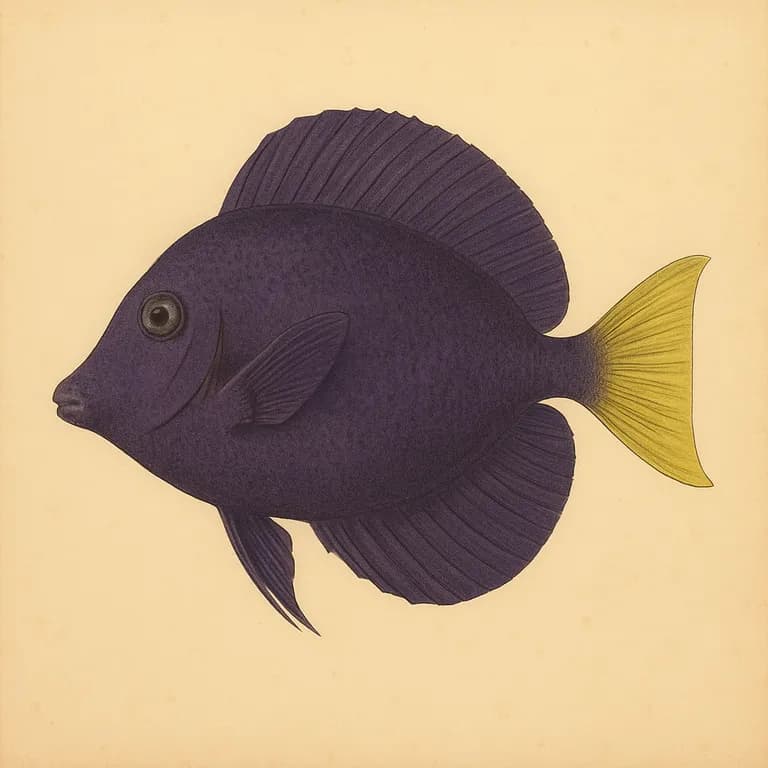
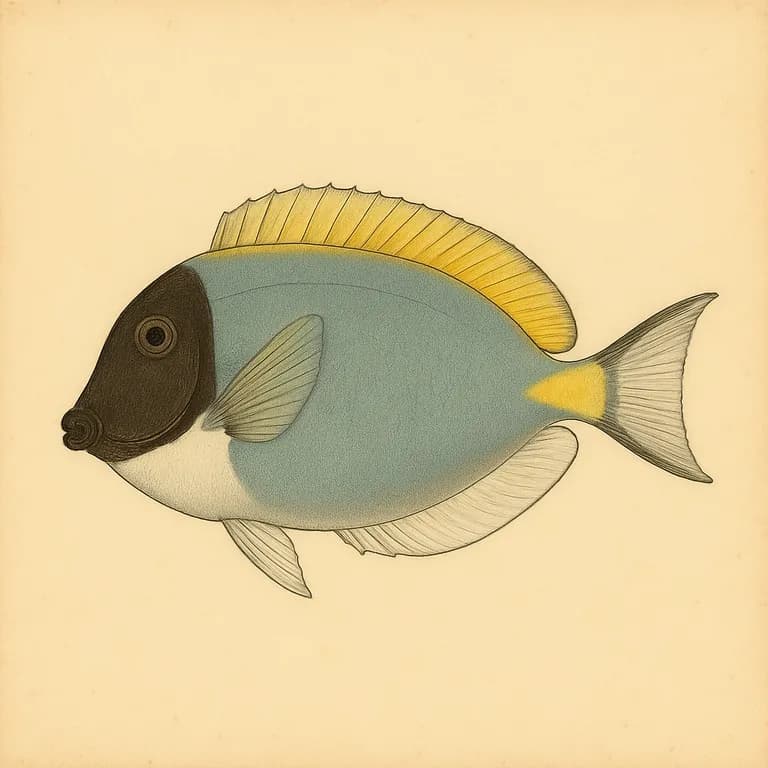
Related species

Keep Blue tang in the BlubHub app
Add this species to your inhabitants, with count and photos, and see the care info next to your own water values, target bands and reminders. Free, no account, everything on your own device.
Values are mainstream hobbyist guidance, not gospel. Always watch what your own animals need.