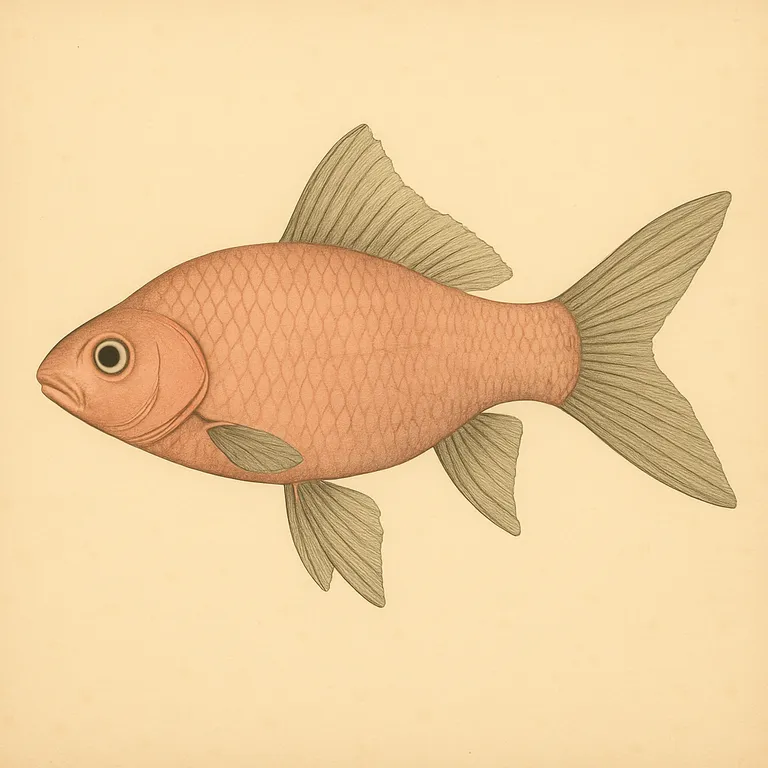
Goldfish (common/comet)
Carassius auratus
FishFreshwater
- Care level
- Easy
- Temperament
- Peaceful
- Recommended tank
- 200 L
- Maximum size
- 30 cm
- Temperature
- 16–22 °C
- pH
- 7–8
- Diet
- Omnivore
Care at a glance
The goldfish may be the best-known aquarium fish in the world, and at the same time the most wrongly kept: a bowl is no place for it. It is a coldwater fish that grows large, can live for decades and produces a lot of waste, so space and solid filtration are not luxuries.
Single-tailed forms like the comet really belong in a pond; for indoors the calmer fancy varieties are the better fit. Goldfish are social animals best kept in company, and they are enthusiastic plant eaters, so choose robust plants or accept some damage. A heater is unnecessary; cool water suits them fine.
Origin and colour
The goldfish (Carassius auratus) was domesticated in China more than a thousand years ago from a grey-brown carp-like fish. The common goldfish, the comet with its long forked tail and the multicoloured shubunkin still have the slim body of that wild ancestor.
Young goldfish are often still brown or olive green and only get their colour later. Adult fish can also change colour, for example to white, without being ill.
Pond or aquarium
A pond needs a section deep enough that the water does not freeze to the bottom in winter. When the water cools down in autumn, goldfish eat hardly anything. Then stop feeding until spring. Do not break a hole in the ice, because the pressure waves from the blows can injure the fish. Keep an opening free with a pond de-icer or a little hot water, so that gases can escape from the water.
Indoors a goldfish mainly needs length: a long tank with plenty of open swimming space, a filter generously sized for the amount of waste and a substantial water change every week.
Feeding and plants
Overfeeding is the most common mistake. Give no more than the fish eat in a few minutes, and alternate dry food with greens such as cooked peas without their skins. Goldfish root through the substrate and nibble soft greenery, but they usually leave anubias and Java fern, with their tough leaves, alone.
Tankmates
Keep a comet with other slim, single-tailed goldfish. Fancy goldfish are slower and miss out at feeding time, and tropical fish want a higher temperature. Small fish and snails that fit in the mouth get eaten.
Male or female, and breeding
In spring males develop small white breeding tubercles on the gill covers and the leading rays of the pectoral fins. These spots are normal and not a sign of white spot disease. Females look fuller from above at that time.
In a pond, goldfish scatter their eggs among the plants and then eat most of them themselves. Among dense planting, some of the fry usually survive. Never release surplus goldfish into a ditch or lake, because they disrupt the ecosystem there.
Good to know
Related species

Keep Goldfish (common/comet) in the BlubHub app
Add this species to your inhabitants, with count and photos, and see the care info next to your own water values, target bands and reminders. Free, no account, everything on your own device.
Values are mainstream hobbyist guidance, not gospel. Always watch what your own animals need.