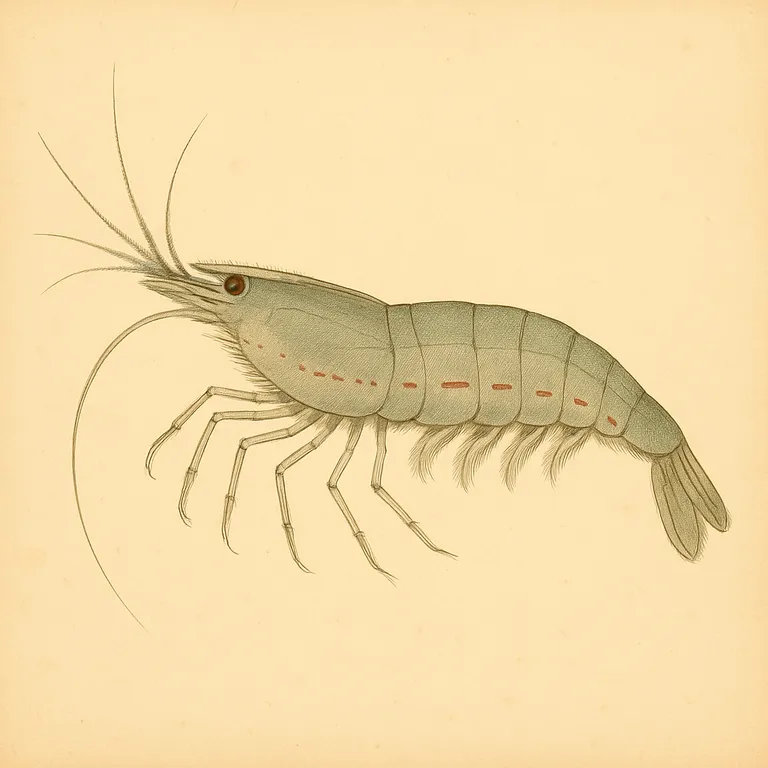
Amano shrimp
Caridina multidentata
InvertebratesFreshwater
- Care level
- Easy
- Temperament
- Peaceful
- Recommended tank
- 40 L
- Maximum size
- 5 cm
- Temperature
- 18–26 °C
- pH
- 6.5–7.8
- Group size
- ≥ 4
- Diet
- Omnivore
Care at a glance
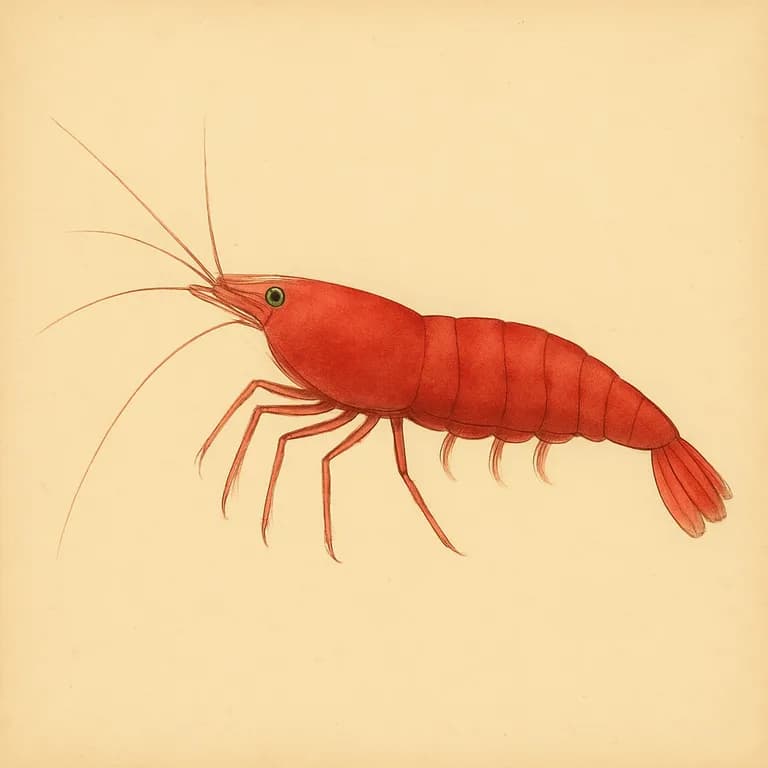
The amano shrimp owes its fame to aquascaping pioneer Takashi Amano, who deployed it as algae police, and the reputation is deserved: few animals clear hair algae as thoroughly. It grows larger than the cherry shrimp and is, if anything, even more unflappable.
It cannot breed in freshwater, as the larvae need brackish water, so a group simply stays a group. Offer sinking food alongside the algae, otherwise a shrimp short of work will start picking at your plants. Beyond that the usual shrimp rules apply: acclimatise slowly and beware of copper.
Origin and life cycle
The amano shrimp comes from coastal rivers and streams in places such as Japan and Taiwan. In Japan it is called yamato-numa-ebi, and in the hobby it was long sold as Caridina japonica. Today Caridina multidentata is the valid name. The adult shrimp live in fresh water, but after hatching their larvae drift with the current to the sea. Only as young shrimp do they move back up the river.
Which algae it clears
Amano shrimp mainly graze soft algae: hair algae, green film on plants and wood, and the bacterial film on every surface in the tank. They do little against black beard algae, hard green spots on the glass and blue-green algae. Nor do they remove the cause of an algae outbreak. With too much light or too many nutrients, the algae simply grow back.
Behaviour and tankmates
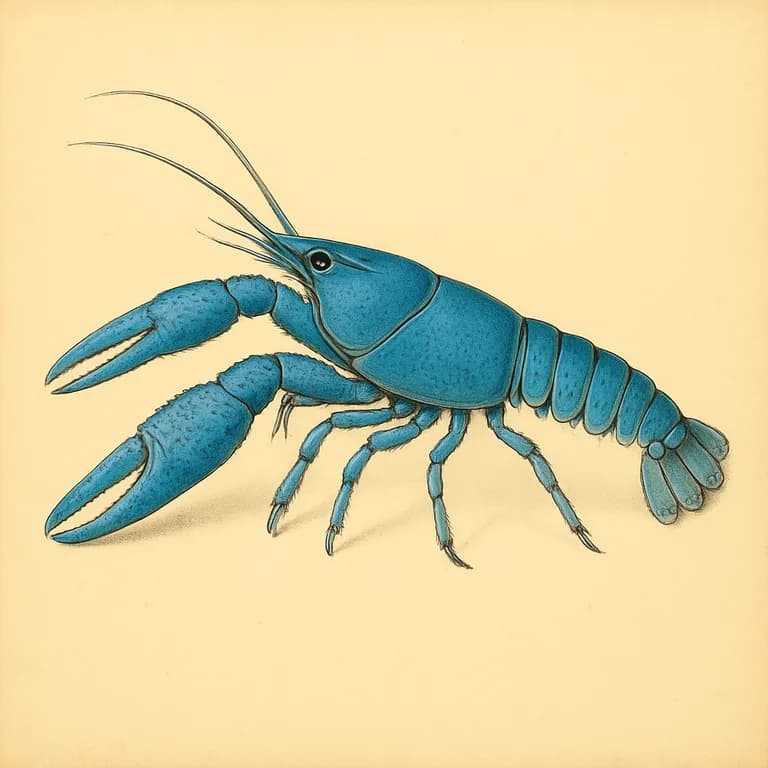
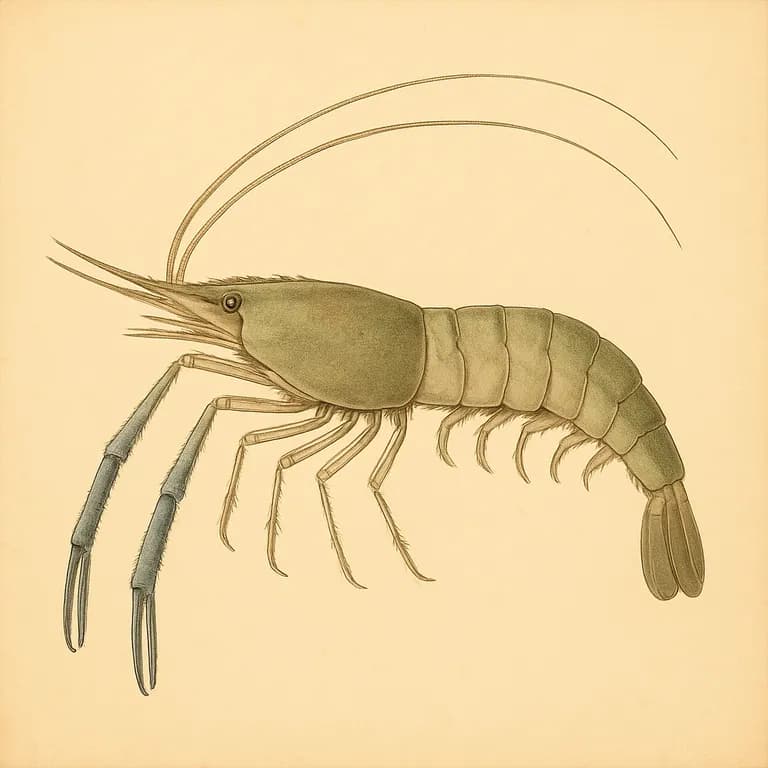
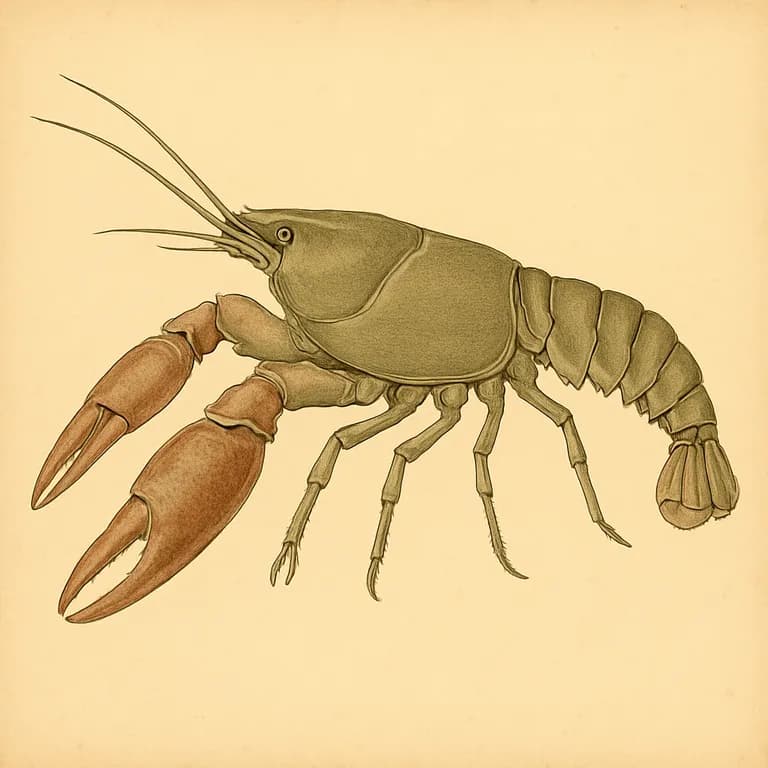
At feeding time amano shrimp are active and bold. They grab a food tablet and walk off with it, even when fish or smaller shrimp want a share. They get along well with cherry shrimp, as long as you make sure the smaller species gets food too. Crayfish, the giant freshwater shrimp and large fish that can eat shrimp are not suitable companions.
Shortly after being introduced, they sometimes climb out of the tank along tubing or cables. A cover without large gaps saves you from finding a dried-out shrimp behind the cabinet later.
Male or female
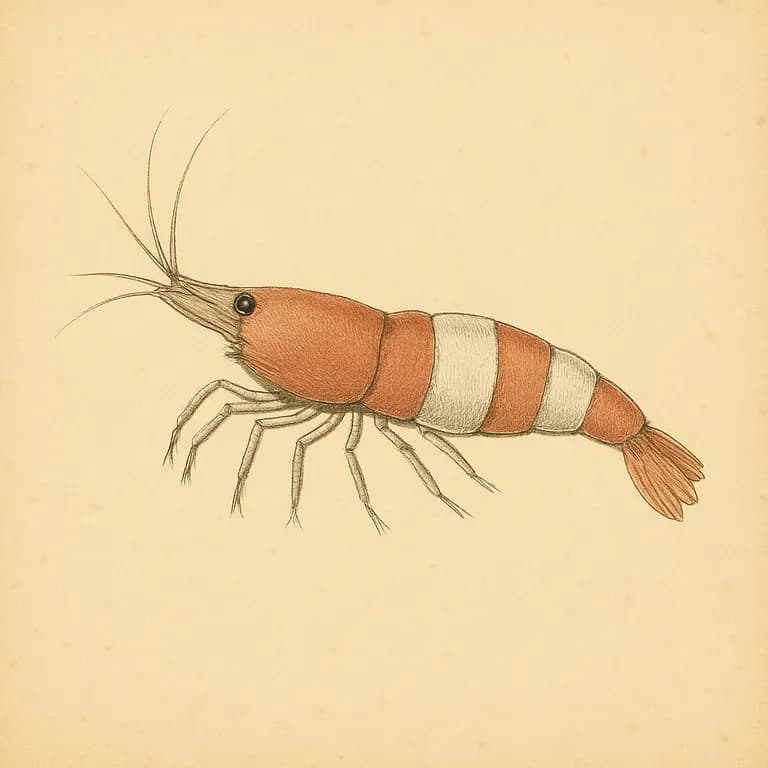
Amano shrimp have rows of reddish-brown markings on their flanks. In males these are usually separate, round dots, in females elongated dashes. Females also grow larger and have a broader abdomen, and a female carrying eggs shows them clearly under her abdomen.
Breeding
Females regularly carry eggs in an ordinary aquarium, and the larvae hatch as well. In fresh water those larvae usually die within a few days. Breeders therefore collect the larvae and raise them in brackish to salt water with very fine food, after which they slowly acclimatise the young shrimp to fresh water. This takes a separate setup and a lot of patience, and is mainly something for experienced breeders.
Best not combined with
Related species

Keep Amano shrimp in the BlubHub app
Add this species to your inhabitants, with count and photos, and see the care info next to your own water values, target bands and reminders. Free, no account, everything on your own device.
Values are mainstream hobbyist guidance, not gospel. Always watch what your own animals need.