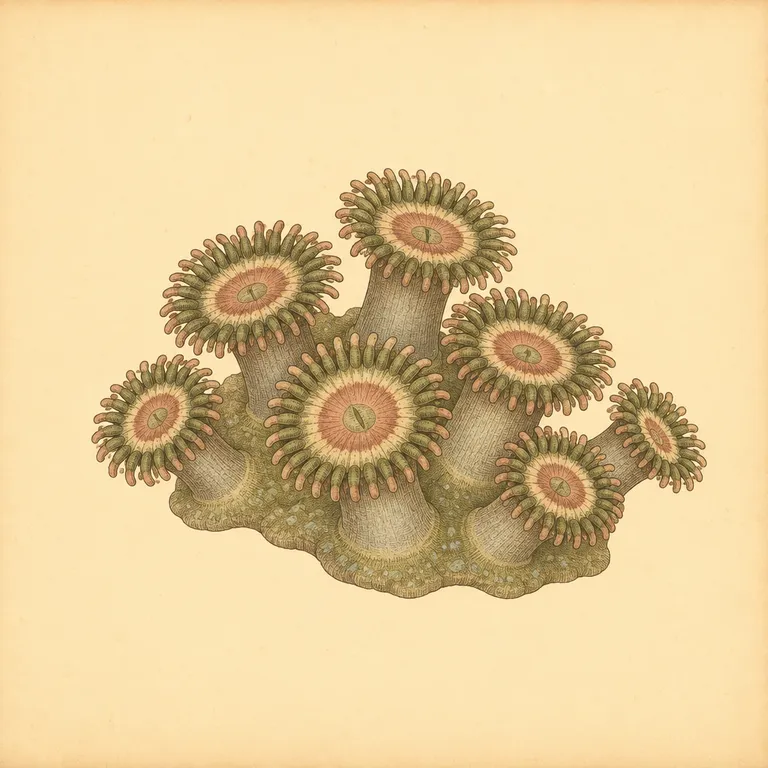
Zoanthids
Zoanthus sp.
CoralsSaltwater
- Care level
- Easy
- Maximum size
- 2 cm
- Temperature
- 24–27 °C
- pH
- 8–8.4
- Light
- Medium
- Flow
- Medium
- Diet
- Photosynthetic
Care at a glance
Zoanthids are many people's first coral, and for good reason: they quickly grow into dense mats, come in almost every colour combination imaginable and forgive a lot of beginner mistakes. They do well under medium light and moderate flow, and a frag of a few polyps will cover a whole rock within a year.
One thing genuinely matters: many zoanthids contain palytoxin, one of the most potent natural toxins there is. Never frag them dry or under hot air, always work with gloves and eye protection, and cut under water where you can. Beyond that: if they stay closed for days, look at flow, film on the polyps, or unwanted visitors such as zoanthid-eating nudibranchs.
Buying and choosing
Zoanthids are sold as frags on a plug or a small piece of rock, often under a made-up name for the colour morph. A healthy frag has no bare patches, and its polyps open within a day or two of being placed.
Check the underside of the plug too, as nudibranch eggs and tiny sea spiders sometimes hitch a ride there. A coral dip when you add the frag removes some of the adult animals; eggs usually survive a dip, so scrape them off.
Light and placement
Place a new frag low in the tank first and move it up step by step. Long, stretched stalks point to too little light; polyps that stay closed or shrink after a move upwards are getting too much.
Zoanthids grow off their rock onto anything next to it, including slower-growing corals. Put them on a separate rock or an island in the sand if you want them to stay in their own spot.
They get most of their energy from light and do not need to be fed. In very nutrient-poor water they often pale and grow more poorly.
Safe fragging and handling
Palytoxin, which many zoanthids contain, is mainly a risk when it gets into your eyes, into a small wound, or into the air as a mist. The amount varies from colony to colony and cannot be seen from the outside, so treat every zoanthid as if it contains palytoxin. Wear gloves, and safety glasses when fragging, because polyps can squirt water when you cut into them or press on them.
Never boil rocks that have or had zoanthids on them, and do not clean them with a pressure washer. Keep children and pets away while you work, and afterwards rinse tools and gloves thoroughly and wash your hands. If you develop symptoms after working with zoanthids, see a doctor and mention that palytoxin may be involved.
Common problems
If polyps disappear for no obvious reason, check the colony in the dark with a torch. Sea spiders, thin long-legged creatures a few millimetres in size, suck polyps dry and hide in the colony during the day.
Good to know
Related species

Keep Zoanthids in the BlubHub app
Add this species to your inhabitants, with count and photos, and see the care info next to your own water values, target bands and reminders. Free, no account, everything on your own device.
Values are mainstream hobbyist guidance, not gospel. Always watch what your own animals need.