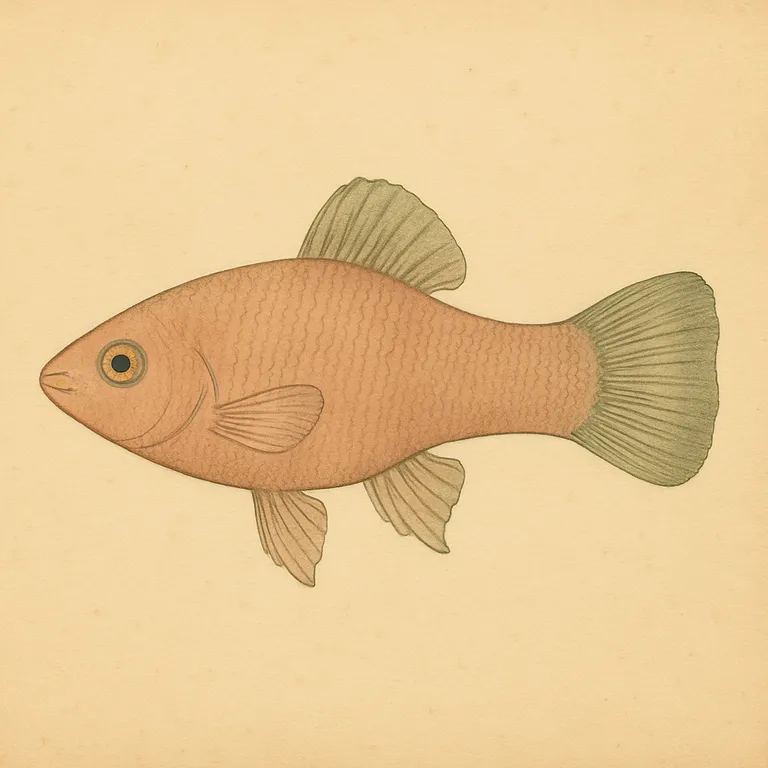
Platy
Xiphophorus maculatus
FishFreshwater
- Care level
- Easy
- Temperament
- Peaceful
- Recommended tank
- 54 L
- Maximum size
- 6 cm
- Temperature
- 20–26 °C
- pH
- 7–8.2
- Diet
- Omnivore
Care at a glance
The platy may be the most underrated beginner fish: colourful, peaceful, always on the move and close to indestructible in medium-hard to hard water. It is a livebearer, so expect fry; with some dense planting a share of them will always make it on their own.
Keep more females than males, or the females get chased relentlessly. Platies eat everything but appreciate some plant matter on the side, from algae to spirulina flakes. In a calm community tank this is a rewarding, lively species that asks little and gives a lot.
Origin and colour forms
The platy (Xiphophorus maculatus) comes from southern Mexico and the east coast of Central America. In the wild it is far less conspicuously coloured; the bright colours in the trade, from red and yellow to blue, are bred forms.
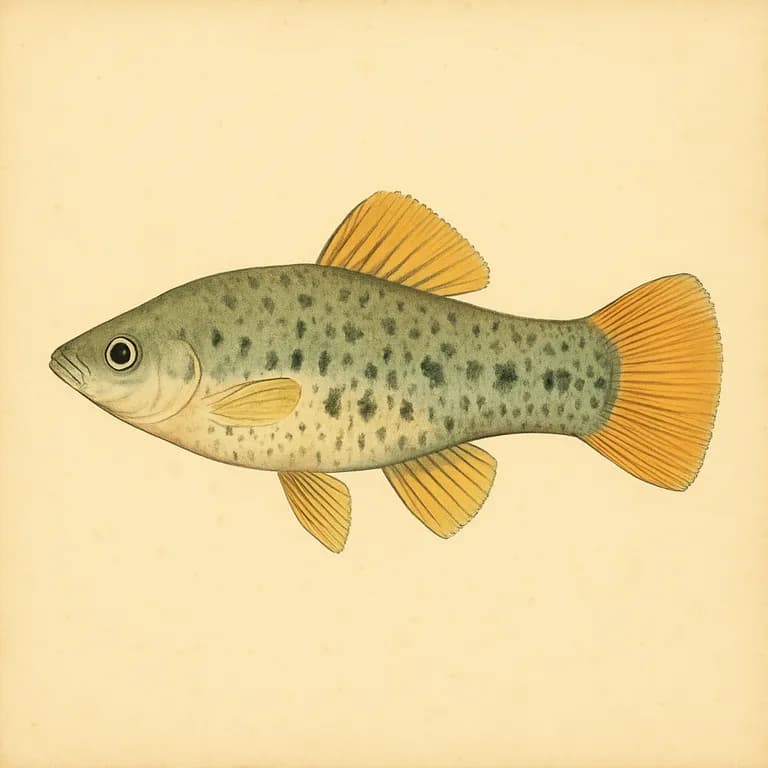
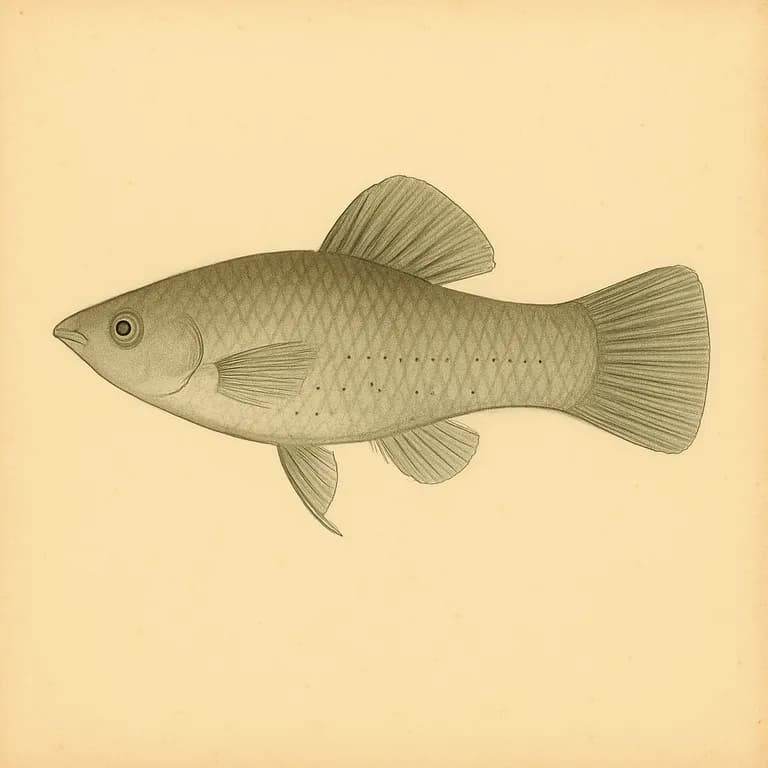
Platies readily interbreed with swordtails and variatus platies. If you want pure fish, keep the species apart.
Male or female
In the male the anal fin has developed into a narrow, pointed mating organ, the gonopodium. The female has a fan-shaped anal fin and grows larger and fuller. In young fish the gonopodium only develops after a few months, so a presumed female can later turn out to be a male.
Just before giving birth, a pregnant female develops an angular, almost square belly. Gestation is usually about four weeks. Because she can store sperm, several broods often follow, even when there is no longer a male in the tank.
Tankmates and setup
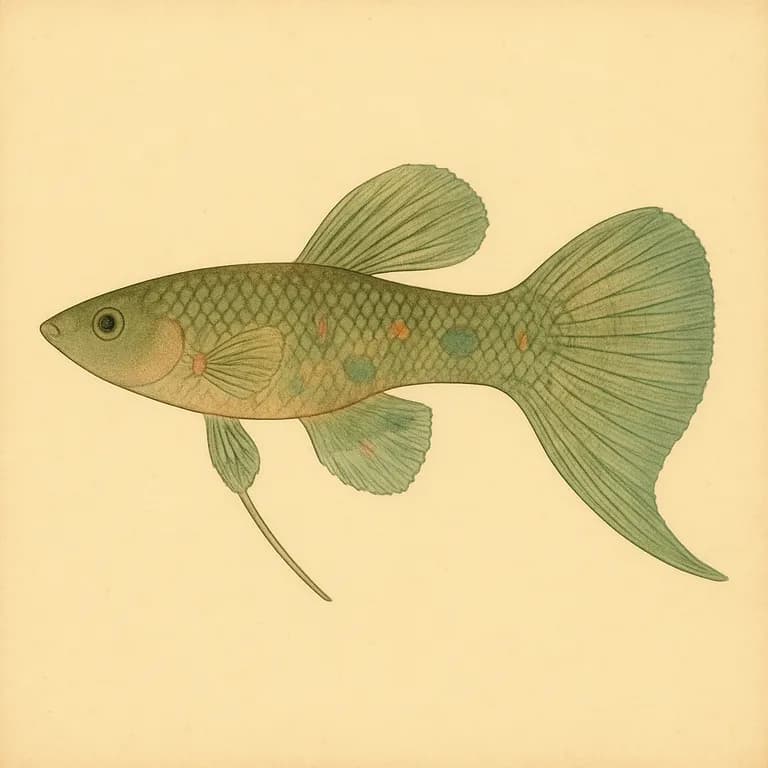
Platies suit other peaceful species that tolerate moderately hard to hard water well, such as guppies, mollies, corydoras and nerite snails. Young fish and shrimp that fit in their mouths get eaten.
They tolerate slightly cooler water than many tropical fish, which also makes them good companions for zebra danios. Platies swim at all levels. An open centre with a densely planted corner of Java moss, hornwort or floating plants gives the adults room and the fry cover.
Buying healthy fish and common problems
When buying, choose fish with spread fins and scales that lie flat against the body. Raised scales that make the fish look like a pine cone from above point to a serious illness; in that case, do not buy from that tank.
In the long run, overpopulation is the biggest problem. Work out how many fish your aquarium can hold before the group grows, and arrange for a pet shop or club to take your young fish. Never release them into the wild.
Related species

Keep Platy in the BlubHub app
Add this species to your inhabitants, with count and photos, and see the care info next to your own water values, target bands and reminders. Free, no account, everything on your own device.
Values are mainstream hobbyist guidance, not gospel. Always watch what your own animals need.